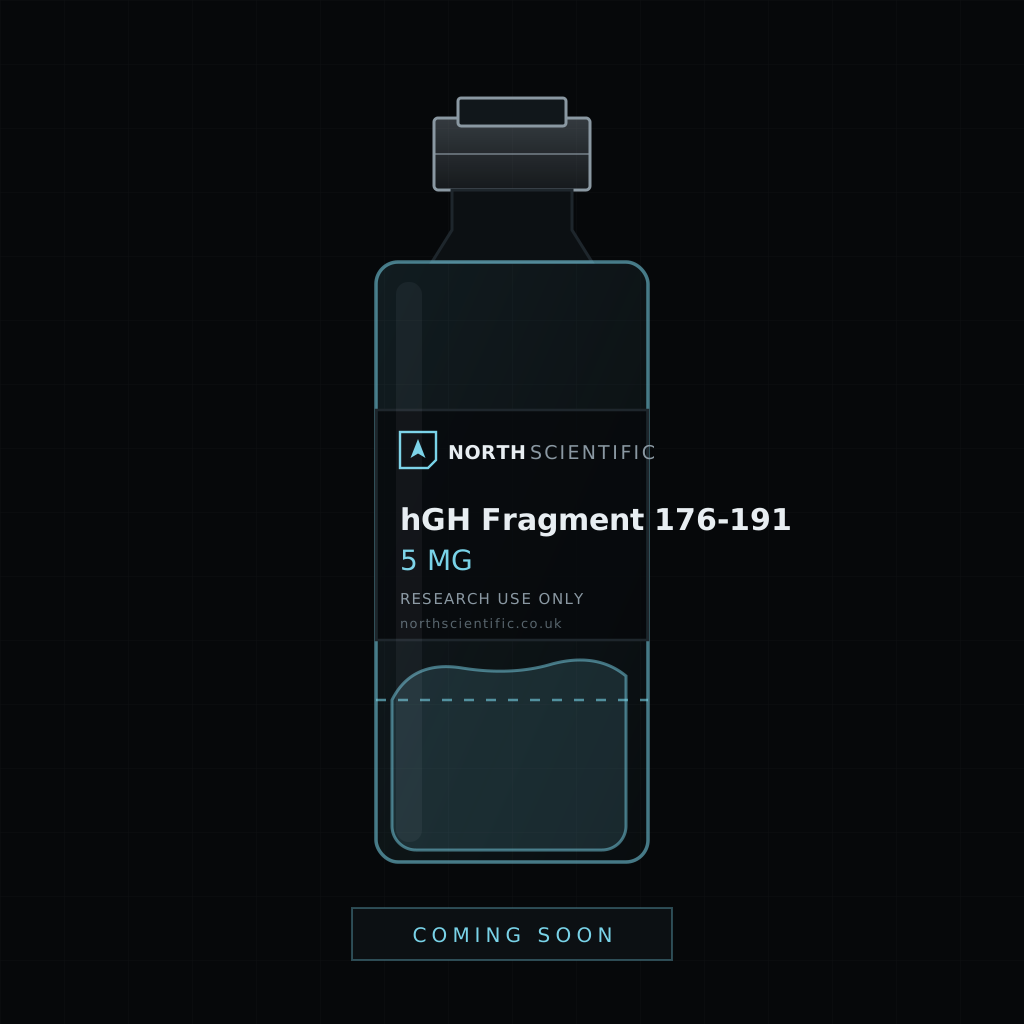
hGH Fragment 176-191
Single peptide · 5 mg · lyophilised · coming soon. Research use only — not for human consumption.
Single peptide · 5 mg · lyophilised · coming soon. Research use only — not for human consumption.
One email when hGH Fragment 176-191 goes on sale · no marketing list · UK delivery included on every order · Pay by card
Synthetic 16-residue peptide, FLRIVQCRSVEGSCGF with a Cys7–Cys14 disulfide. Planned as a 5 mg listing to the same standard as the rest of the catalogue: lyophilised powder in a crimp-sealed glass vial, held in UK stock, dispatched tracked on working days with UK delivery included in the price.
hGH fragment 176–191 is a synthetic peptide of sixteen amino acid residues with the sequence FLRIVQCRSVEGSCGF, corresponding to positions 176 to 191 at the C-terminus of human growth hormone, cyclised by a disulfide bond between its two cysteines (Cys7 and Cys14 of the fragment, Cys182 and Cys189 of the parent numbering). The material we plan to list is made by chemical synthesis and is not the 191-residue protein. Its molecular formula is C78H123N23O22S2 with a molar mass of approximately 1799.1 g/mol for the free peptide; the PubChem record for this fragment gives the acetate-salt values (C80H127N23O24S2, 1859.1 g/mol) instead, and the CAS number in circulation could not be confirmed against a registry-linked source, so we leave that row out rather than guess.
It differs from AOD-9604 at a single position: the native fragment begins with phenylalanine, AOD-9604 with tyrosine. The planned listing is 5 mg fill weight as lyophilised powder in a crimp-sealed glass vial; fill weight and net peptide content are separate figures, as explained in peptide purity versus net peptide content.
hGH Fragment 176-191 is not yet on sale. It is listed so that laboratories in the United Kingdom can see what is planned and register interest; when it is in UK stock we send one email to say so, with the price, and nothing else. When it goes on sale it will be supplied on the same terms as every other material here: the price shown will be the total payable with UK delivery included, dispatched by Royal Mail Tracked 24 in unbranded packaging, with an order placed before 14:00 on a working day leaving that day where stock allows. Dispatch detail is on the shipping page. We supply research organisations, educational and commercial laboratories, and individuals purchasing for legitimate research.
The fragment will be supplied lyophilised, for storage at −20 °C protected from light. Its disulfide bridge is stable in the dry cake but, in solution, open to reduction, further oxidation or thiol exchange, and its glutamine (Gln6) can deamidate; both pathways need water. Keep the seal intact and the vial cold and dark; see lyophilised peptide storage and stability.
hGH Fragment 176-191 is listed by NorthScientific strictly for laboratory research use. It is not a licensed medicine and has not been evaluated or approved by the MHRA; it is not a food, cosmetic or supplement; and it is not for human or veterinary consumption in any form. We provide no dosing, protocol or outcome guidance of any kind, and nothing on this page, in our guides or in correspondence should be read as such.
No. NorthScientific lists hGH Fragment 176-191 for laboratory research only; it is not for human or veterinary consumption in any form. We give no dosing or protocol guidance, and nothing on this page should be read as such.
We list it now so that laboratories can register interest, and we email once, when it is in UK stock and on sale. No date is promised: it goes on sale when supply meets the same standard as the rest of the catalogue, and the price is published then.
Because the number that circulates for this fragment could not be verified against a registry-linked source when we checked, and the PubChem record describes the acetate salt rather than the free peptide. We would rather leave a row out than publish an identifier we cannot stand behind.
By the first residue only: phenylalanine here, tyrosine in AOD-9604. Everything else, including the Cys7–Cys14 disulfide, is the same, so the formulae differ by one oxygen atom and the masses by about 16 g/mol.
Not necessarily. The planned 5 mg is the fill weight of lyophilised powder in the vial; the peptide share depends on salt form and residual moisture. We do not publish an analysis for this material, so read the figure as fill weight.