MOTS-c
Single peptide · 10 mg · lyophilised · coming soon. Research use only — not for human consumption.
Single peptide · 10 mg · lyophilised · coming soon. Research use only — not for human consumption.
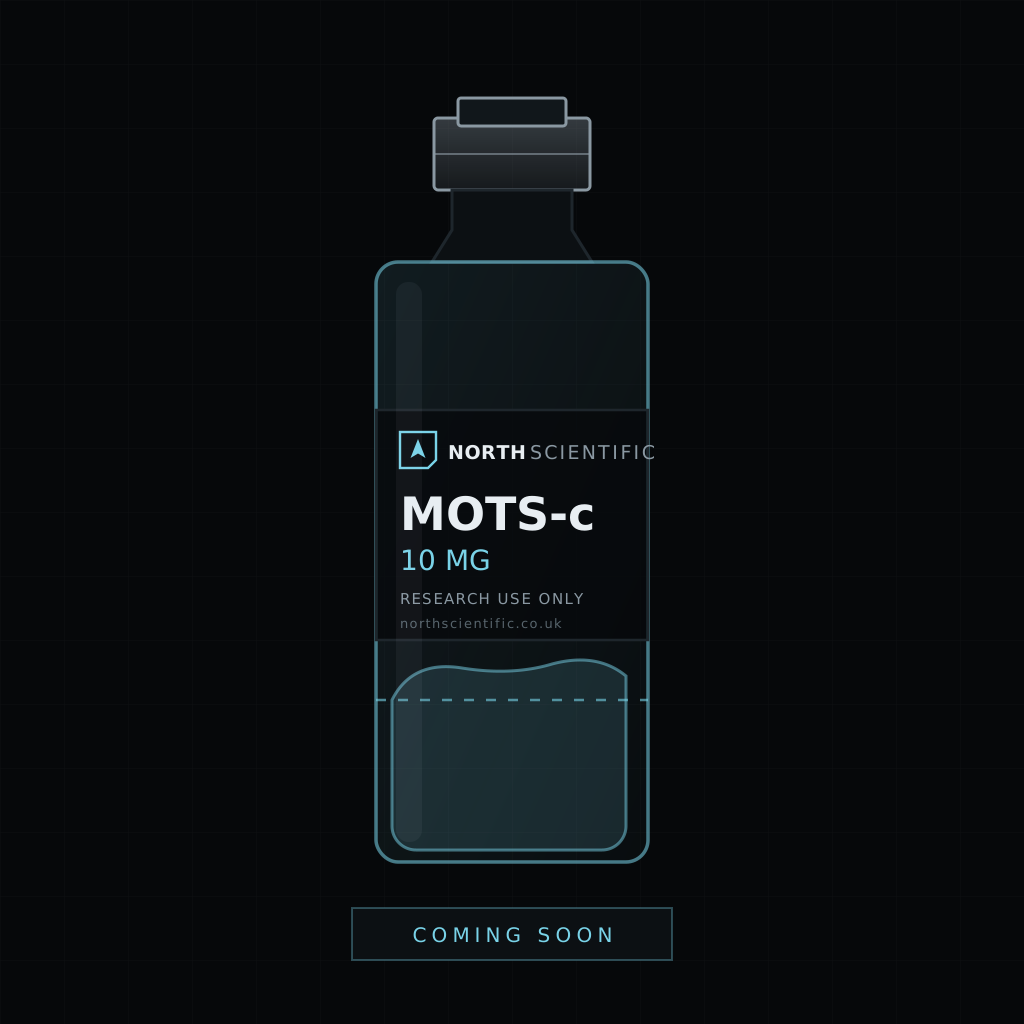
One email when MOTS-c goes on sale · no marketing list · UK delivery included on every order · Pay by card
Synthetic 16-residue peptide, sequence MRWQEMGYIFYPRKLR. Planned as a 10 mg listing to the same standard as the rest of the catalogue: lyophilised powder in a crimp-sealed glass vial, held in UK stock, dispatched tracked on working days with UK delivery included in the price.
MOTS-c is a synthetic peptide of sixteen amino acid residues with the sequence MRWQEMGYIFYPRKLR (Met-Arg-Trp-Gln-Glu-Met-Gly-Tyr-Ile-Phe-Tyr-Pro-Arg-Lys-Leu-Arg). The name records where the sequence was first described: it is encoded within the mitochondrial 12S ribosomal RNA gene, and the “c” denotes the open reading frame it was assigned. The material we plan to supply is wholly synthetic rather than isolated from any tissue. Its identifiers are CAS 1627580-64-6, molecular formula C101H152N28O22S2 and a molar mass of approximately 2174.6 g/mol for the free peptide; vendor lots supplied as a trifluoroacetate or acetate salt read higher on a mass basis.
The planned listing is 10 mg fill weight per vial as lyophilised powder in crimp-sealed glass. As with every material in the catalogue, the fill weight is the mass of powder in the vial rather than a claim about net peptide content, which is explained in peptide purity versus net peptide content.
MOTS-c is not yet on sale. It is listed so that laboratories in the United Kingdom can see what is planned and register interest; when it is in UK stock we send one email to say so, with the price, and nothing else. When it goes on sale it will be supplied on the same terms as every other material here: the price shown will be the total payable with UK delivery included, dispatched by Royal Mail Tracked 24 in unbranded packaging, with an order placed before 14:00 on a working day leaving that day where stock allows. Dispatch detail is on the shipping page. We supply research organisations, educational and commercial laboratories, and individuals purchasing for legitimate research.
MOTS-c will be supplied lyophilised, to be stored at −20 °C and protected from light. Its sequence carries two methionine residues (Met1 and Met6) and a tryptophan (Trp3), the three side chains most readily oxidised, and a glutamine (Gln4) that can deamidate in solution. None of that chemistry proceeds while the cake stays dry, cold and dark, so the crimp seal and the freezer do the work; see lyophilised peptide storage and stability.
MOTS-c is listed by NorthScientific strictly for laboratory research use. It is not a licensed medicine and has not been evaluated or approved by the MHRA; it is not a food, cosmetic or supplement; and it is not for human or veterinary consumption in any form. We provide no dosing, protocol or outcome guidance of any kind, and nothing on this page, in our guides or in correspondence should be read as such.
No. NorthScientific lists MOTS-c for laboratory research only; it is not for human or veterinary consumption in any form. We give no dosing or protocol guidance, and nothing on this page should be read as such.
We list it now so that laboratories can register interest, and we email once, when it is in UK stock and on sale. No date is promised: it goes on sale when supply meets the same standard as the rest of the catalogue, and the price is published then.
Because the sequence was first identified as an open reading frame within the mitochondrial 12S rRNA gene, which is what the name abbreviates. That is a statement about where the sequence comes from, not about the material we list, which is made by chemical synthesis.
Synthetic peptides purified by reversed-phase HPLC are usually isolated as a trifluoroacetate or acetate salt. The formula and mass in the table are for the free peptide; the salt form of a given lot adds to the measured mass, which is one reason fill weight and net peptide content are different figures.
Not necessarily. The planned 10 mg is the fill weight of lyophilised powder; how much of that is peptide depends on the salt form and residual moisture. We do not publish an analysis for this material, so read the figure as fill weight.
Related reading: Purity vs net peptide content · Lyophilised peptide storage · How research peptides are made · all guides